
When it comes to painting steel, concrete, or even wood, knowing the differences between alkyd, epoxy, and urethane coatings is key to getting the results you want.
Alkyd coatings are ideal for general-purpose use—especially when ease and practicality are top priorities.
Benefits of Alkyd Paints:
If you’re looking for a facility-friendly coating that can be used by anyone, touched up easily, and still looks sharp, alkyd is still a good choice.
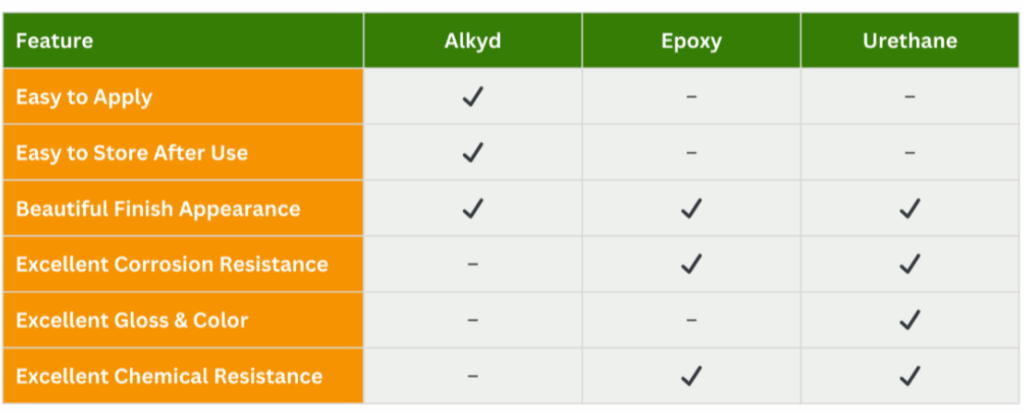
Epoxies Offer:
Urethanes Offer:
When it comes to harsh chemical exposure and aggressive environments, epoxy coatings are unmatched. They provide an impermeable barrier that delivers superior chemical resistance, making them the go-to choice for tank linings and industrial floors. For industries like food and beverage processing, pairing these primers with proper corrosion control solutions is essential to prevent structural degradation.
While urethane coatings offer decent chemical resistance, they're primarily favored for their outstanding UV stability and gloss retention; therefore, they're usually applied over an epoxy primer rather than replacing it. Alkyds, on the other hand, shouldn't be used in highly corrosive and/or alkaline environments because they can saponify and fail prematurely.
If your goal is a highly durable surface that withstands mechanical wear, impact, and weathering, a multi-coat epoxy-and-urethane system is typically your best bet. This combination is widely recognized as a premier durable coating system for heavy industries like oil and gas plants.
Absolutely. No matter which primer you choose, the lifespan of the entire system depends heavily on initial preparation. However, high-performance systems like epoxies are much more sensitive to contaminants than alkyds; you'll need a perfectly blasted, clean substrate to ensure they don't delaminate.
Yes, you can; however, there are a few strict rules you've got to follow to prevent peeling. Because alkyd paints cure slowly, the underlying coat must be completely dry and fully cured; otherwise, the stronger solvents in the polyurethane might cause the alkyd layer to lift or wrinkle. You'll also need to thoroughly sand the gloss off the alkyd surface to create a strong mechanical bond before applying your polyurethane topcoat.
While epoxies and urethanes offer far superior protection, finish, and durability, they require expertise to apply correctly With the right experience and guidance, we help you get the most out of these high-performance coatings to protect your facility long-term. Contact us today to get started.